
Creating a safe environment for your event attendees should always be at the top of your planning list. Bleachers are an essential component of many spectator events — but the safety and structural integrity of aging bleachers is frequently overlooked, especially at rural events.
This post is part of our Bleacher Safety Series. Today we’re focusing on riser boards and footboards — one of the most commonly overlooked areas of bleacher safety, and one of the most important when it comes to protecting young children.
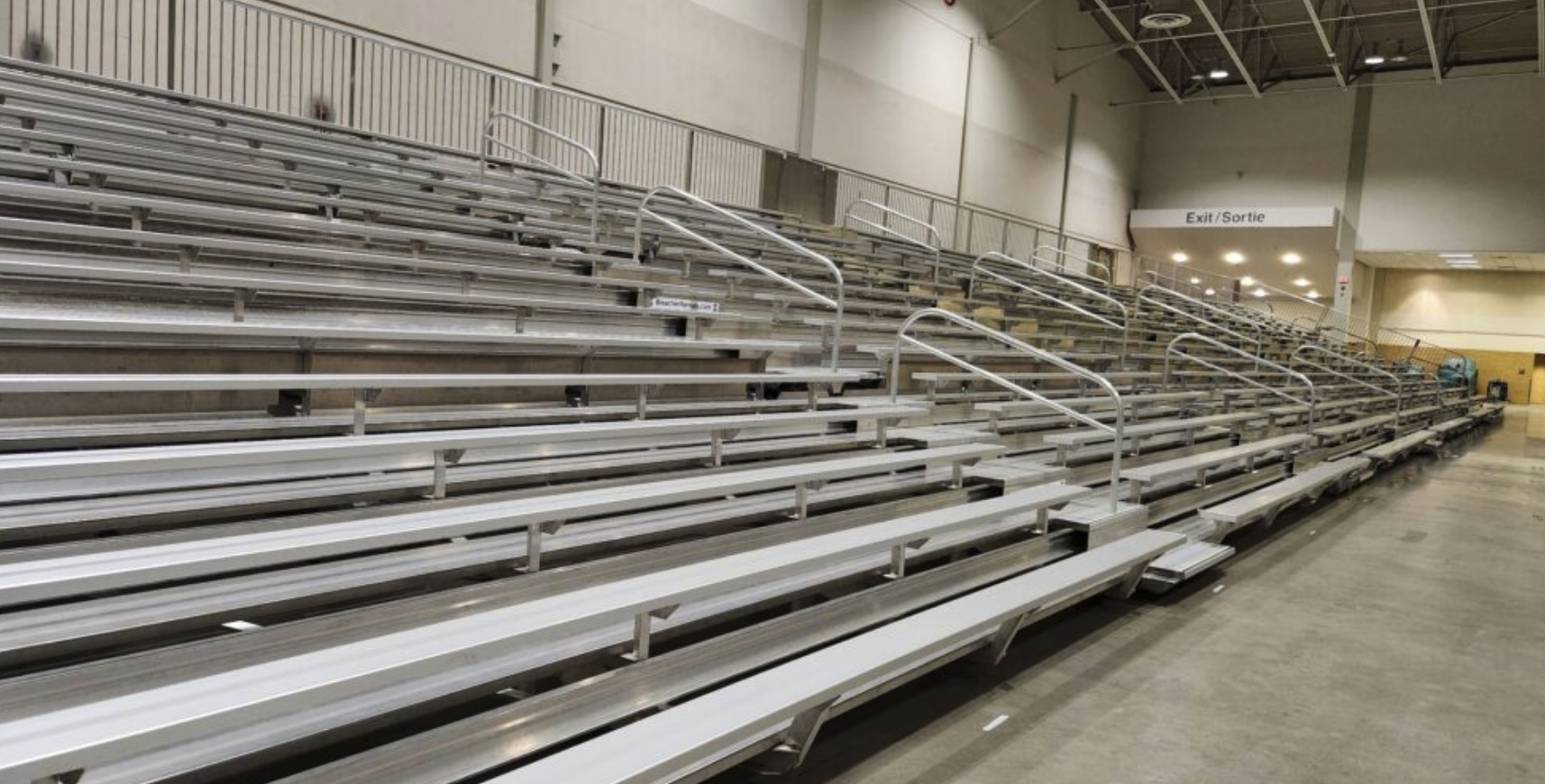
I didn’t realize the importance of proper riser boards and footboards until after our second rodeo event. We had switched from 5-row to 10-row wooden bleachers, increasing our capacity from 700 to 1,400 seats. The county allowed us to use them, and the rental company had been renting these same units for over 30 years — so I assumed they must be safe. No building permit was required.
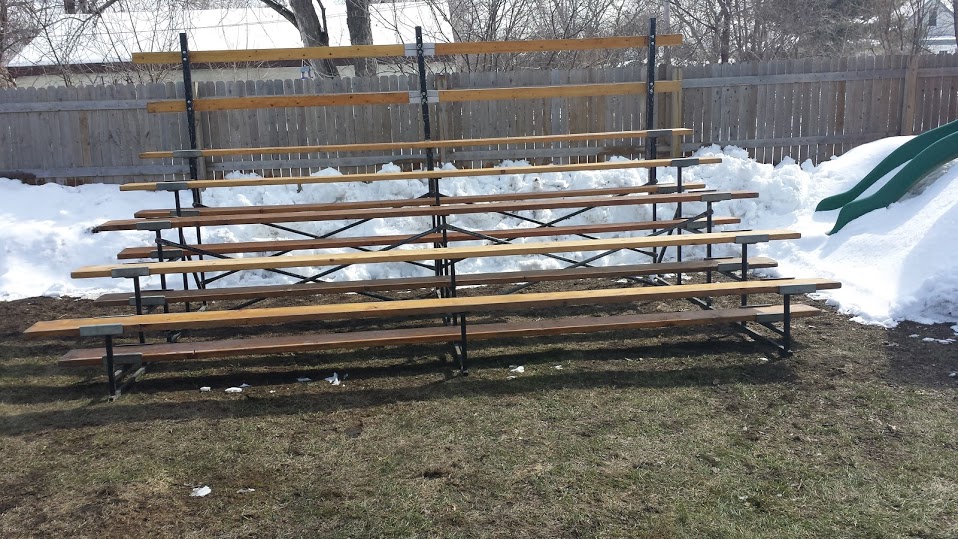
After they were set up, something felt off. I started asking questions:
I was less than pleased. But the bleachers were already set up, and we felt we had no other option. My mind raced all weekend worrying that something could go wrong.
We opened the gates at 9:30 am — half an hour early, because cars were already lined up down the road. By the time the 2 pm show started, our unsafe bleacher setup was overloaded with 2,000+ people sitting on every available space. “I hope these things hold” was my ongoing thought all weekend.
Luckily, no major incidents occurred and the event was a success. But the post-event feedback survey told a familiar story — people wanted bleachers that were safer and more accessible, especially for young children and seniors.
We needed a better option. That obsession led me to dig into everything there is to know about bleacher safety — and in the spring of 2018, Bleacher Rentals was born.
One of my biggest concerns with those old wooden bleachers was the large openings between the footboards and risers. Kids were climbing on them and could easily fall through. This isn’t just an aesthetic problem — it’s a code violation that puts children directly at risk.
The building code exists specifically because of incidents like this. Here’s what it requires.
Once I did my research, this is what the International Building Code (IBC) requires:
* “Guidelines for Retrofitting Bleachers” — US Consumer Product Safety Commission, Washington DC (1999): https://cpsc-prod.ctacdev.com/s3fs-public/330.pdf
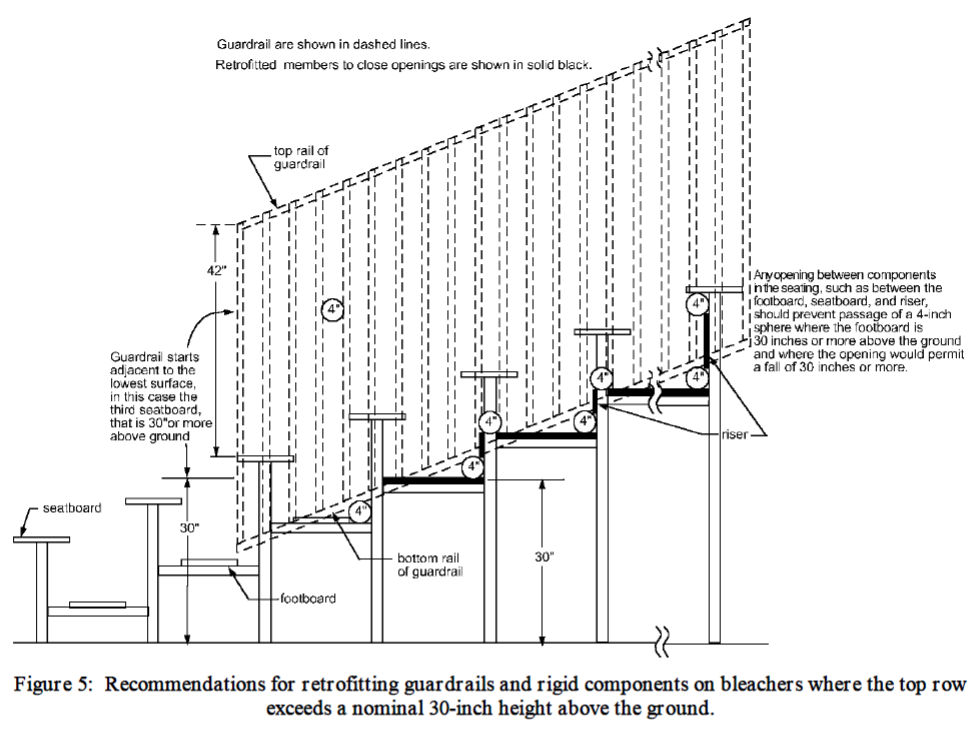
The 4″ sphere rule isn’t arbitrary. Research shows that 95% of children aged 4 months and older cannot completely pass through a 4″ opening. The rule was designed specifically to prevent young children from falling through bleacher gaps.
It’s worth noting that the majority of bleacher injuries and deaths occur in children under 10 years old. When you see an old bleacher with wide-open gaps between rows, that’s not just an eyesore — it’s a documented hazard.
Ask yourself: if a 4″ ball can fit through your bleachers, they are not code compliant. Is the risk of injury to your guests — and potential lawsuits against you — worth it?
Whether you own your bleachers or rent them, always verify that your risers and footboards meet building code before your event opens. Ask your supplier directly — any reputable bleacher company should be able to confirm compliance without hesitation.
A quick on-site check: bring a 4″ ball or sphere and test it against the gaps in your bleachers. If it fits through anywhere above 30″, your bleachers are not code compliant.
👉 Download our free Bleacher Safety Checklist to walk through a full IBC inspection of your bleachers.
🔒 Want everything in one place? A Complete Guide to Bleacher Safety PDF is coming soon — free for event organizers. Sign up to be notified.

Krista is the co-founder of Bleacher Rentals and co-organizer of the Norfolk Pro Rodeo. She loves to share her knowledge on event planning, temporary seating solutions, and bleacher safety gained from years of experience supporting rodeos, fairs, festivals, and sporting events.