
Getting sponsorship is one of the most important things you can do for a first-time event — and also one of the hardest. Without it, your event will almost certainly lose money. Think of your favourite events. They almost all have sponsors behind them, and for good reason.
Sponsors do two things: they keep your event financially viable, and they add legitimacy. When local businesses put their name behind your event, they’re effectively vouching for it — telling the community it’s worth supporting. That validation matters more than most first-time organizers realize.
When we started the Norfolk Pro Rodeo, we were expecting our first child and not in a position to put $40,000 of our own money at risk. So we set a firm rule: we would raise at least $20,000 in local sponsorship before announcing the event publicly.
This did two things. It gave us a concrete goal and a built-in exit — if we couldn’t raise the money, the event wouldn’t happen. And it forced us to convince successful local business owners that the event was worth their investment.
Here’s the logic we used at the time: if you can’t convince a local business owner to spend $300 to advertise at your event, what makes you think a thousand strangers will pay $20 each to attend? Getting sponsors first is a real-world test of your concept — and the businesses who say yes become your first advocates, promoting the event to their own customers.
Start with your target market. Who is attending your event, and what kinds of businesses want to reach them?
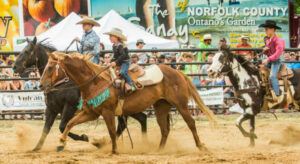
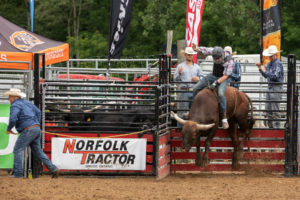
For our rodeo, the target market is families and people in the horse and agricultural community. That naturally points to sponsors like tractor dealerships, horse trailer companies, farm equipment suppliers, and pool builders — businesses whose customers look a lot like our audience.
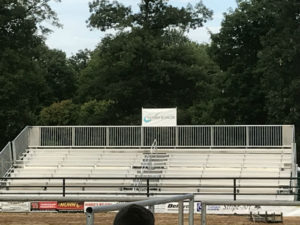
Think about what companies in your area would benefit most from exposure to your crowd. Those are your best-fit sponsors, and they’ll be much easier to close than businesses with no natural connection to your event.
Before you approach anyone, put together a proper sponsorship package. It doesn’t need to be elaborate — it needs to be clear. A good sponsorship package covers:
We use three levels — Gold, Silver, and Bronze — so that larger companies with bigger marketing budgets can get more exposure, while smaller businesses can still participate at an accessible price point.
Our first year, the levels were priced at $95, $225, and $700. The middle tier included four day passes, a banner in the arena, a listing in our event program and on our website, and several on-site announcements during the event.
A few principles that have worked well for us:
Your first year will involve a lot of cold visits. Walk into local businesses, introduce yourself, explain the event, and ask. Expect a lot of nos.
Every rejection is worth analyzing. Why did they say no? Was your pitch unclear? Did the event not feel relevant to their business? Did they not trust that it would actually happen? Use that information to refine your approach for the next call.
A few practical tips:
At the event itself, make time for your sponsors. Buy them a drink. Ask how they’re enjoying the day. These relationships compound — a sponsor who feels valued becomes a sponsor who comes back, upgrades their package, and tells other businesses to get involved.
After the event, send a personal thank-you. Include a photo from the event featuring their banner if you have one. It takes five minutes and pays dividends the following year.
Getting sponsors gets significantly easier after a successful first event. You have proof now — attendance numbers, photos, testimonials, media coverage. The conversation shifts from convincing people to take a chance on you, to presenting something with a demonstrated track record.
After a few years of running the rodeo, we reach out to previous sponsors in January and almost all of them confirm immediately. We now have companies calling us to ask about sponsorship opportunities — a complete reversal from those early cold visits.
The groundwork you lay in year one — the relationships, the thank-you notes, the on-site experience — is what makes year two and beyond far easier to fund.
For a closer look at how a sponsorship package is structured for an established event, you can view our current Norfolk Rodeo sponsorship information at www.norfolkrodeo.com/sponsors/