
When planning an event, one of your most important responsibilities is the safety of your guests, staff, and volunteers. A risk assessment helps you think ahead — identifying what could go wrong and putting a plan in place before it does.
A risk assessment is a structured process where you and your event team brainstorm every possible problem, issue, or injury that could occur at your event — from someone getting a minor cut, to a major weather event rolling through your grounds.
For each scenario you identify, you then:
A risk matrix is a simple tool that helps you visualize and prioritize each risk based on two factors: likelihood and impact. The matrix below rates each combination as Low, Moderate, High, or Extreme — helping you focus your planning energy where it matters most.
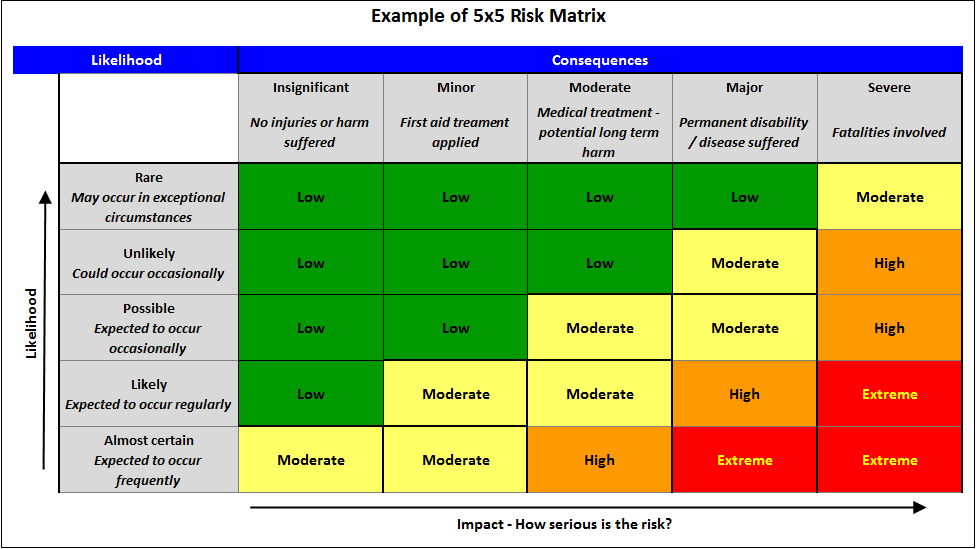
Once you’ve plotted each risk on the matrix, start with your High and Extreme items first — these are the scenarios that are most likely to cause serious harm and should have clear action plans before your event opens.
We complete this exercise every year before our annual rodeo event. Here are three real examples from our risk assessment to give you an idea of how this works in practice:
Action: Requested the county reduce the road speed limit to 50 km/h for the weekend; reflective vests worn by all parking volunteers; signage and dedicated volunteers to direct traffic properly; first-aid trained volunteers and EMS on site
Completing a risk assessment ahead of your event does two important things. First, it forces you and your team to think through scenarios you might otherwise overlook — and put plans in place before they become problems. Second, it creates a paper trail that demonstrates due diligence.
If you need to meet with your local council, police, or EMS team — either during the planning process or after an incident — having a documented risk assessment shows that you took your responsibilities seriously.
This process may feel like just another item on your already long to-do list. But it is one step you won’t want to skip.
Have questions about safe event seating? Contact us or get a free quote — we’re happy to help.