
This article is for general informational purposes only and does not constitute legal advice. Premises liability laws vary by jurisdiction. Consult a qualified legal professional and your insurance provider for guidance specific to your situation and location.
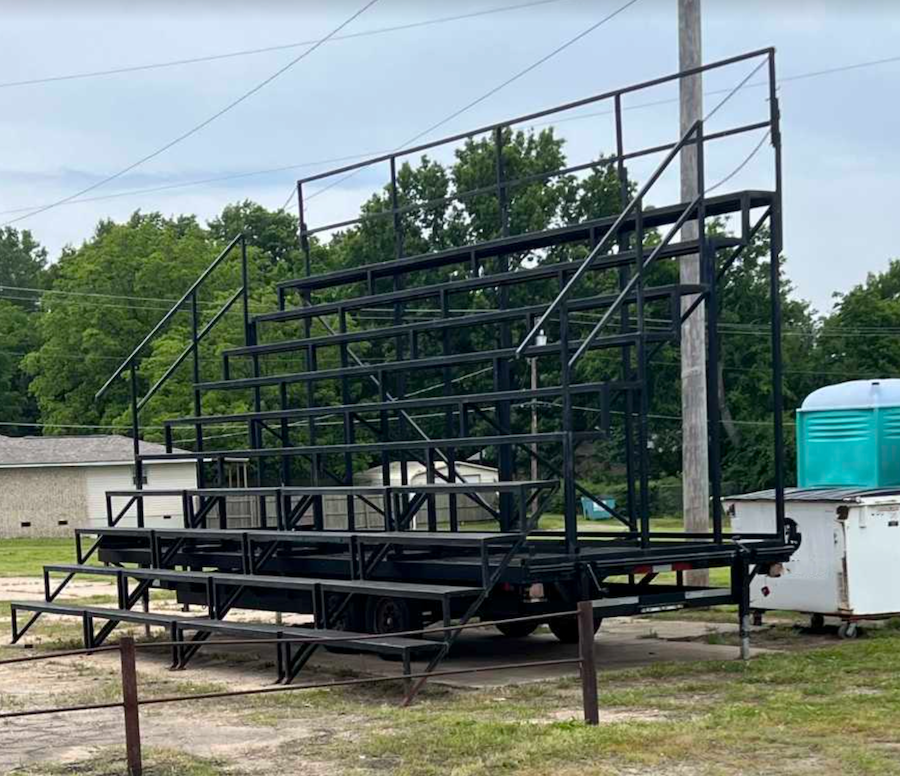
According to the US Consumer Product Safety Commission, thousands of bleacher-related injuries occur every year in the United States. Many involve multiple victims. Many result in significant financial settlements or jury awards. And the majority do not happen at large professional venues with dedicated maintenance staff — they happen at fairs, rodeos, school athletic events, and community gatherings where aging, non-compliant bleachers are most likely to be in use.
If you organize one of those events, the question of who is responsible when something goes wrong has a straightforward legal answer. It starts with you.
Under premises liability law, event organizers and venue owners owe guests a duty of care from the moment they access the event grounds. That duty is not limited to obvious hazards. It extends to proactively identifying risks, maintaining structures in safe condition, and ensuring the equipment you provide meets applicable safety standards.
Bleachers are not exempt from that obligation. The seating you provide at your event is your responsibility — whether you own it, rent it, or inherited it from whoever ran the event before you.
When bleachers fail and a guest is injured, the legal question is whether the organizer took reasonable steps to ensure the seating was safe. Negligence claims in bleacher injury cases have cited failing to inspect before an event, continuing to use a structure known to be aging or deteriorating, and renting equipment without verifying code compliance. Multiple parties can face liability depending on the circumstances — the event organizer, the venue owner, the bleacher rental company, and in some cases the original manufacturer. Shared liability does not reduce your exposure. It means multiple claims can be filed simultaneously, and yours may be among them.
Children bear the greatest risk. The most common structural failure points, gaps between rows, missing side rails, and non-compliant stairs, specifically endanger them. Many of these incidents are not random. They are the result of structures that have not been inspected, maintained, or updated, often for years.
In 2024, a bleacher collapse at a rodeo event in Texas killed one person and injured eleven others. Lawsuits filed in the aftermath alleged that organizers had failed to perform a sufficient inspection of the structure before the event and had attempted to continue using aging equipment rather than replacing it with a safe, current alternative.
This was not a freak accident. The decisions that led to that collapse were made well before anyone took a seat.
That is the nature of most bleacher failures. They do not announce themselves. They are the result of choices made during the planning process — about what equipment to use, whether to inspect it, and whether its condition was verified or simply assumed. By the time something goes wrong, it is too late to make different choices.
The same failure points appear repeatedly in bleacher injury cases:
Structural deterioration. Bleachers exposed to weather are subject to corrosion, rot, and weakening at key structural points over time. A structure that passed a visual check several years ago may not be safe today. The CPSC recommends that bleachers used at public events be thoroughly inspected at least quarterly by trained personnel.
Overcrowding beyond design capacity. Bleacher structures are engineered to hold a specific load. Allowing occupancy beyond that rating — common when events draw larger crowds than anticipated — puts the structure under stress it was not designed to handle.
Non-compliant design and poor construction quality. Many bleachers currently in use at rural events and community venues were built before modern safety standards existed, often without engineering oversight. They were never designed to meet current code — and in many jurisdictions, nobody has required them to be updated.
Missing or inadequate safety features. Missing side and back rails, absent or non-compliant stairs, large gaps between rows, and surfaces without anti-slip treatment are not just code violations. They are the conditions most commonly involved in the injuries that lead to claims. Our Bleacher Safety Series covers each of these requirements in detail.
The legal standard for avoiding liability is not perfection. It is reasonable care — evidence that you took the steps a responsible organizer would take to ensure guest safety. Four things demonstrate that:
Pre-event inspection. Inspect your bleachers before every event. Walk the stairs. Check the rails. Look for corrosion, loose components, and gaps larger than 4 inches above 30 inches off the ground. Document what you checked and when — that record matters if a claim is ever filed.
Written code compliance confirmation. Ask your bleacher supplier to confirm in writing that the structure meets International Building Code requirements. A supplier who cannot provide that confirmation is a risk you are accepting on behalf of your guests.
Capacity management. Know the rated capacity of your bleachers and enforce it. Allowing a structure to be occupied beyond its load rating is a direct path to liability.
Maintenance records. If you own bleachers, keep a log of every inspection, repair, and concern raised and addressed. An absence of records does not read as neutral in a legal context — it suggests the maintenance did not happen.
For event organizers who rent bleachers, the burden of structural maintenance sits with the rental supplier. Your obligation to verify compliance before the gates open does not.
Most bleacher injuries are preventable. Not because they are difficult to predict, but because the conditions that cause them — gaps too wide, rails too low, structures too old — are visible on inspection. The problem is that the inspection does not happen, or the equipment is not replaced when it should be, or a supplier is trusted without being verified.
The decisions that prevent bleacher injuries are made well before anyone takes a seat. At Bleacher Rentals, that is exactly where we start. Every unit we deploy is inspected before it leaves our yard. Every installation gets a full post-setup walkthrough before your event opens. Written compliance information is available on request. And if something does not look right on delivery day, we work through it — because by the time your gates open, the seating should be the last thing you are thinking about.
Download our free Bleacher Safety Checklist and walk through your current setup before your next event.

Jason is the Marketing Manager at Bleacher Rentals. He works closely with the team to share helpful insights, support event organizers, and highlight the company’s commitment to safe, reliable mobile bleacher rentals. Jason enjoys helping planners feel confident and prepared — from the first quote to event day.