
When it comes to bleacher seating, the type of seat and foot boards you choose makes all the difference—not just in appearance, but in safety, durability, and long-term maintenance costs. The three most common materials are aluminum, steel, and wood.
Understanding how these materials compare can help event organizers, schools, and municipalities choose the best option for their bleacher installations or mobile bleacher rentals.
Here’s how they stack up against each other.
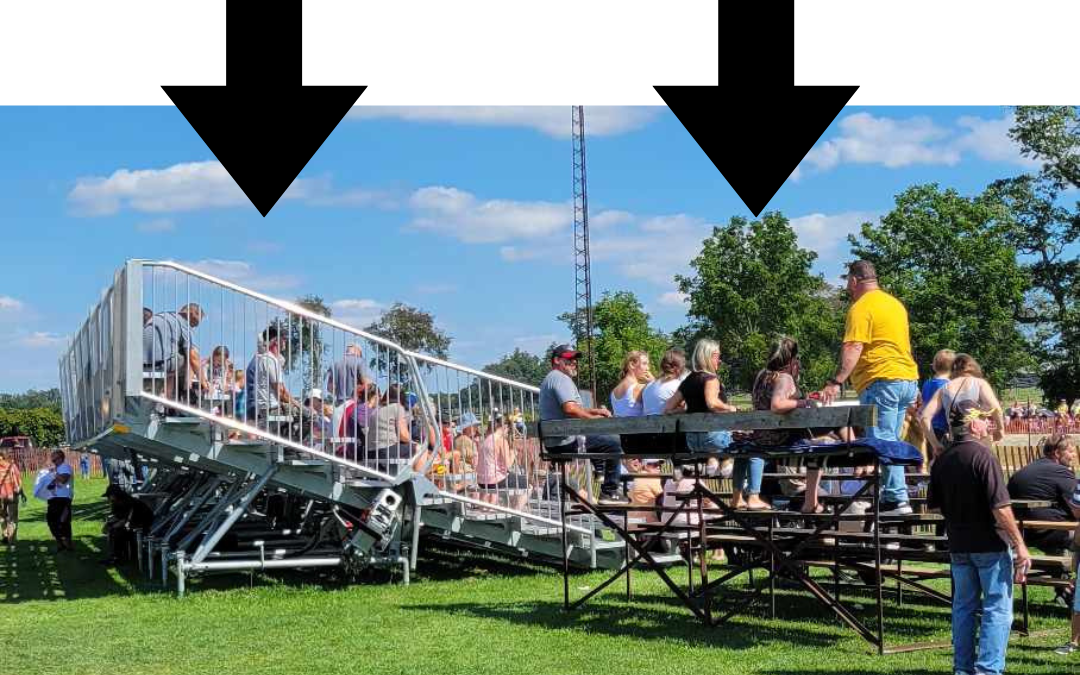
When spectators sit on bleachers, safety and comfort are critical. The surface of the seating and foot boards affects traction, stability, and the overall experience—especially in outdoor venues where rain or moisture may be present.
Milled Aluminum
One of the biggest advantages of milled aluminum is its textured, non-slip surface. Even when wet, it provides more traction than smooth steel or aging wood planks. That means fewer slips and falls for spectators.
Because of this safety advantage, milled aluminum is the standard material used in many modern mobile bleacher systems and event seating solutions.
Steel
Steel can be sturdy, but it’s also more slippery, especially in rain or snow. Without a textured surface, safety can be a concern in outdoor installations.
Wood
While wood offers a traditional look, it’s the least safe of the three. Over time, cracks, warping, and splinters pose hazards for fans and require frequent inspection.
When safety and spectator comfort are the priority, materials with built-in traction and smooth edges perform far better in real-world conditions.
✅ Winner: Aluminum — the safest surface for modern bleacher seating.
Bleachers are often exposed to years of weather and heavy use. The material used for seating boards plays a major role in how well the structure holds up to rain, sun, temperature changes, and daily wear.
Aluminum
Aluminum is naturally weather resistant. It won’t rust, rot, or decay—even when exposed to years of rain, snow, or sun. This makes it a great choice for both indoor installations and outdoor event seating.
Steel
Steel is strong but vulnerable to rust and corrosion if not properly coated or maintained. In outdoor environments, this means ongoing painting, sealing, or galvanization to protect it.
Wood
Wood is the most vulnerable to the elements. It can rot, absorb moisture, and warp over time. Regular sealing and replacement are almost always required.
For organizations that need seating that will withstand heavy use and changing weather conditions, corrosion resistance is a major advantage.
✅ Winner: Aluminum — unmatched resistance to rust, rot, and weather damage.
Beyond the initial purchase or installation, the long-term upkeep of bleacher seating can vary significantly depending on the material. Maintenance requirements directly impact operating costs and the lifespan of the system.
Aluminum
Virtually maintenance-free. Aside from occasional cleaning, aluminum planks can last for decades without needing replacement. This is one reason aluminum is widely used in mobile bleacher trailers and professional bleacher rental fleets.
Steel
Steel requires periodic treatment to prevent rust. If neglected, boards may need to be replaced sooner than expected.
Wood
The most maintenance-heavy option. To remain safe and functional, wood requires frequent inspection, sanding, sealing, and eventual replacement.
Over the lifespan of a bleacher system, these maintenance requirements can significantly affect total cost.
✅ Winner: Aluminum — the lowest maintenance and most cost-efficient long-term option.
Bleachers are often installed in highly visible public spaces such as stadiums, fairgrounds, and event venues. The material used for seating boards influences how well the structure maintains its appearance over time.
Aluminum
Aluminum maintains its clean, modern appearance year after year. It doesn’t fade, peel, or splinter, helping facilities maintain a professional look.
Steel
Steel may initially look sleek, but rust spots and paint chipping can quickly make bleachers appear worn or poorly maintained.
Wood
Wood has a classic aesthetic, but weathering, fading, and splinters cause it to deteriorate faster than other materials.
For venues hosting public events, appearance matters just as much as performance.
✅ Winner: Aluminum — long-lasting appearance with minimal upkeep.
When comparing aluminum, steel, and wood bleacher boards, aluminum clearly comes out on top. It’s safer, more durable, weather resistant, and virtually maintenance-free, offering the best long-term value for schools, arenas, municipalities, and event organizers.
That’s why most modern mobile bleacher rentals and professional event seating systems rely on milled aluminum seating boards.
While steel and wood may still appear in older installations, organizations looking for safety, longevity, and minimal maintenance should strongly consider aluminum when selecting bleacher seating systems.
| Feature | Milled Aluminum | Steel | Wood |
| Safety | Non-slip (even when wet) | Slippery when wet | Splinters, cracks, uneven over time |
| Weather Resistance | Will not rust or rot | Rusts without protective coating | Warps, rots, absorbs moisture |
| Durability | Long-lasting, decades | Strong but prone to corrosion | Short lifespan outdoors |
| Maintenance | Very low (occasional cleaning) | Needs repainting/coating | High (sanding, sealing, replacing) |
| Appearance | Clean, modern, doesn’t fade | Can chip, peel, rust spots | Classic look, but deteriorates quickly |
| Overall Value | ★★★★★ (Best) | ★★★ (Fair) | ★★ (Poor) |
Jason is the Marketing Manager at Bleacher Rentals. He works closely with the team to share helpful insights, support event organizers, and highlight the company’s commitment to safe, reliable mobile bleacher rentals. Jason enjoys helping planners feel confident and prepared — from the first quote to event day.