
If you read our post on how we lost $100,000 throwing a concert, you’ll know that the biggest mistake most first-time event organizers make is going too big, too fast. We get so excited about our vision that we convince ourselves we’re going to create the most amazing event anyone has ever seen — and make a ton of money doing it. Start small. Learn the ropes first.
While you’re doing that, here are seven of the most common mistakes first-time event organizers make — and how to avoid them:
Getting sponsorship is one of the most important things you can do for a first-time event — and also one of the hardest. Think of your favourite events. They almost certainly have sponsors behind them.
Sponsors do two things: they keep your event financially viable, and they add legitimacy. When local businesses put their name behind your event, it signals to the community — and to local council — that your event is worth supporting.

One of our biggest mistakes at the campground concerts was not pursuing sponsors. Events lost money, the community wasn’t on board, and council eventually rejected future event applications. With our annual rodeo, we did the opposite — we secured local sponsors before even announcing the event publicly. It made a significant difference from year one.
You can’t be the best at everything — and if you’re new to running large-scale events, hiring someone with experience is crucial. It will save you money and headaches in the long run.
Here’s a real example of what this costs when you get it wrong. When I applied for the permit for my first concert in 2009, the city council, police, EMS, health unit, and fire chief could tell I had no idea what I was doing. They imposed requirements to protect themselves: 26 licensed security guards, 4 police officers on site, and a fully fenced perimeter. That added $20,000 to my budget — for an event that drew about 300 people total.

Compare that to our first rodeo permit meeting. By that point I had event experience and could speak confidently to every question they had. The result: 4 security guards (required because we were serving alcohol), no police officers, no fencing. We drew 1,000 people per day.
The difference was preparation and experience. If you don’t have it, hire it.
This applies especially to booking entertainment. Booking agents are very skilled at extracting maximum fees from inexperienced buyers. Unless you want to pay your tuition the hard way, bring someone experienced to that negotiation.

I know — I just said hire people with experience. But handing your entire marketing budget to a marketing company is a different mistake entirely.
Most marketing companies operate on a “more is better” philosophy — they like to spend your money across as many channels as possible with no guaranteed return. Marketing expenses can spiral quickly with little to show for it.
A better approach: brainstorm your marketing strategy with experienced advisors, then make your own decisions about where to spend. If you’re booking a band and want radio coverage, find someone who has actually worked at a radio station and knows how to negotiate — not a general agency who will charge you for the introduction. More on marketing your event here.
There are two ways people hear about an event: they’re looking for you, or you’re looking for them.
If they’re looking for you, you need to be found where they’re searching — local listings, social media, Google. If you’re looking for them, you need to know exactly who they are and where their attention is — and spend only what your budget can absorb.
A common miscalculation: new organizers assume that $100 in advertising that sells $100 in tickets means they broke even. It doesn’t. Your advertising spend needs to generate many times its cost to cover the full expense of running the event.

In your first year, find every free advertising channel available — community boards, Facebook groups, local media, partner promotions — and talk to everyone you know about the event. Spend wisely, especially in year one.
They’re not. Your target market is a specific group of people — and the more precisely you can define them, the more effective your marketing will be and the less money you’ll waste reaching the wrong audience.
Are you targeting families with young children? Seniors? The 18–25 crowd? What are their interests? Where do they live? Where do they spend their time online?
Defining your target market doesn’t mean other people can’t attend — it means you know exactly who you’re speaking to when you advertise, and you can build your event experience around them. That focus improves both your marketing ROI and your guest satisfaction.
This one seems like a smart cost-saving move. It isn’t.
Your front gate is where your revenue comes in. Put someone you completely trust in charge of the cash box — at the door, the bar, and anywhere else money changes hands. This is not the place for an enthusiastic volunteer with no accountability.
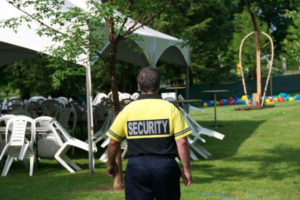
Hire licensed security guards from a reputable company, especially if you’re serving alcohol. You don’t need an army — even a small, visible security presence keeps people acting responsibly and protects you if something goes wrong. This is a cost worth paying.

You don’t — not until you ask. Send post-event surveys, talk to volunteers and visitors during and after the event, and actively collect feedback on what people liked, what they’d change, and what they wish you had offered. You can’t see everything that happens at your own event, so gathering different perspectives is invaluable.
This is another reason starting small matters. A smaller first event gives you room to learn without the consequences being catastrophic.
At our first rodeo, our biggest complaint was the seating. We had rented wooden bleachers — the only affordable option at the time. Parents flagged safety concerns for young children, and seniors raised accessibility concerns (no stairs, no rails). We hadn’t noticed any of this until people told us. We then went to a similar event, sat on the same bleachers with our one-year-old, and immediately understood the problem.
That feedback is the direct reason Bleacher Rentals exists — we went looking for safe, accessible, affordable mobile bleachers and couldn’t find them, so we built the business to fill that gap. If you’re having the same problem with your event seating, we can help.
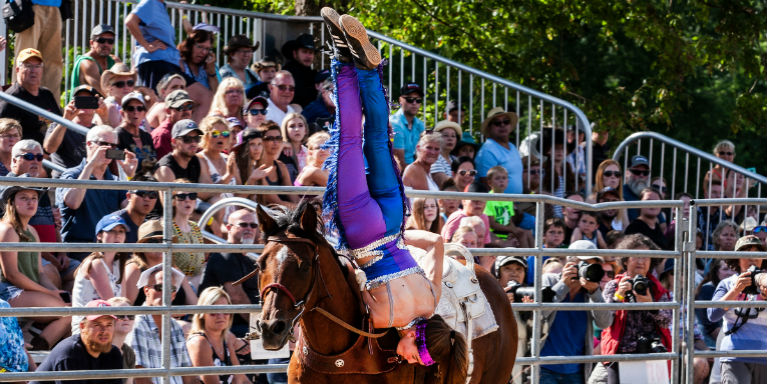
(image: trick-riding-donnies-hitchngo-nb-Cropped-min — caption: Norfolk Ram Rodeo, with bleacher seating from BleacherRentals.com)